
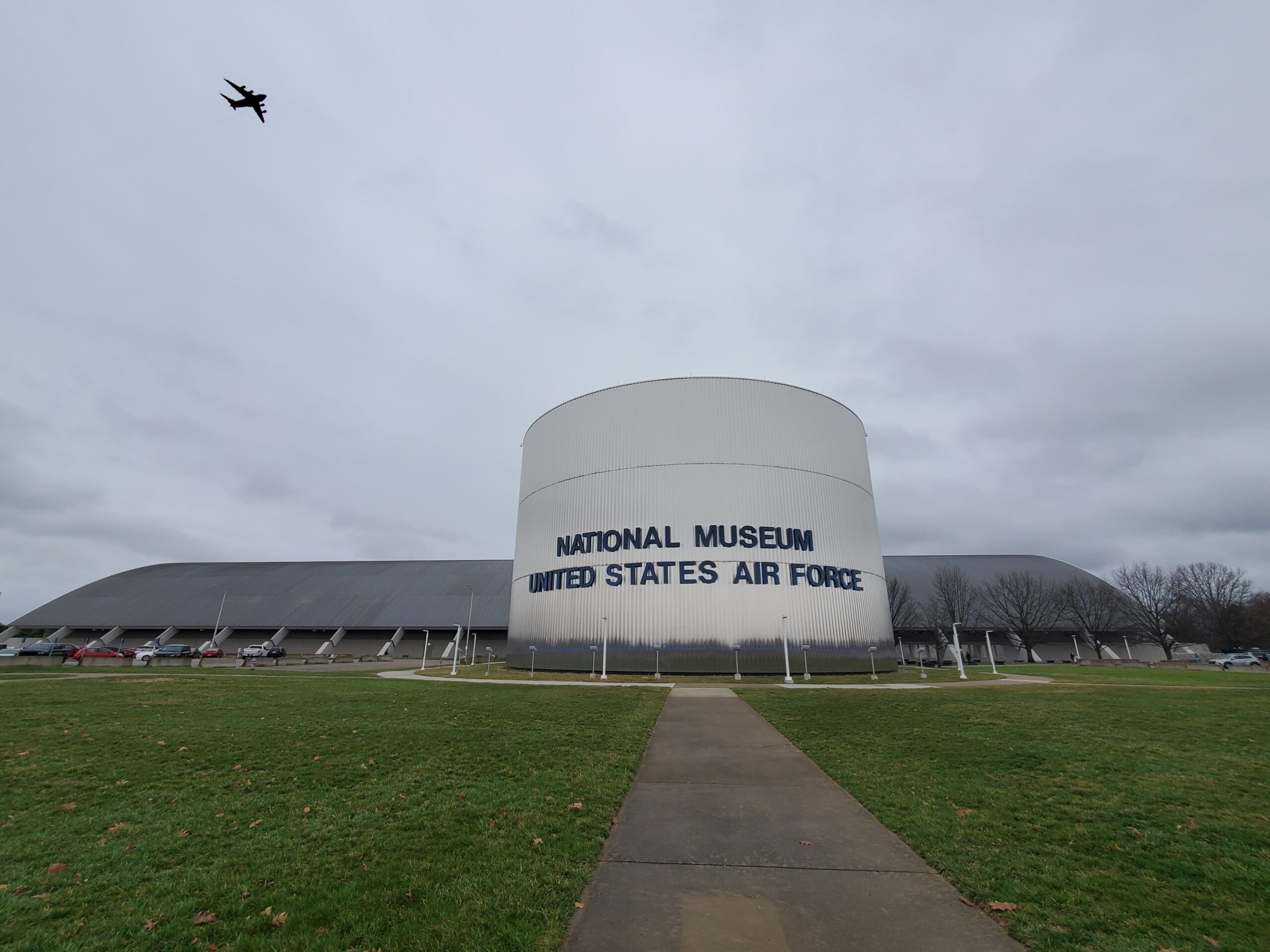
If you’re planning a fun and easy day trip from Columbus, the Dayton Air Force Museum is one of the best choices in Ohio. Located about an hour west along I-70, this incredible place is officially known as the National Museum of the U.S. Air Force. It’s the world’s largest and oldest military aviation museum, filled with more than 360 aircraft, missiles, and artifacts that bring aviation history to life. The best part? Admission is completely free.
Whether you’re an aviation enthusiast, a history lover, or a family looking for something unique to do, the Air Force Museum in Dayton is a must-see. In this post, I’ll take you through the highlights of the museum, share a few tips, and show you why it’s worth the drive.
Why Dayton Is the Birthplace of Flight
Dayton holds a special place in aviation history. It’s where the Wright brothers, Wilbur and Orville, were born and raised. These inventive brothers, originally bicycle shop owners, designed and built the world’s first successful powered airplane. While their historic 1903 flight took place in Kitty Hawk, North Carolina, they returned to Dayton to refine their work at Huffman Prairie, a site on Wright-Patterson Air Force Base. The Dayton Air Force Museum stands near this base, honoring their groundbreaking work and Ohio’s important role in shaping the future of flight.
Inside the Museum: What to See
Stepping into the museum feels like entering a living timeline of aviation. Admission is free, and the museum is open daily from 9 a.m. to 5 p.m., making it an accessible adventure for all. The museum is divided into four main hangars, each focused on a different era of flight. Let’s explore what you’ll find in each one.

Hangar 1: Early Years and World War II Galleries
Start your visit in Hangar 1, home to the Early Years Gallery. Here you’ll see how flight began, including a replica of the Wright brothers’ 1909 Military Flyer, the first military aircraft ever built. Nearby, the World War I exhibits showcase delicate wooden planes that tell the story of the first air battles in history.


Next, the World War II Gallery takes you into one of the most defining periods in aviation history. This part of the Dayton Air Force Museum features iconic aircraft like the B-17F Memphis Belle, the first heavy bomber to complete 25 missions over Europe. You’ll also see the B-29 Superfortress Bockscar, which dropped the atomic bomb on Nagasaki. The exhibits go beyond showing planes. They share stories of bravery, innovation, and resilience through flight suits, medals, and letters.
Standing beneath those enormous aircraft and reading about the people who lived through that time was deeply moving. It’s impossible not to be emotional by what they endured, yet also inspired by how quickly aviation evolved, from simple wooden frames to powerful machines that changed history.


Before moving on, stop by the Air Force Hall of Fame. It honors pioneers, pilots, and engineers who shaped aviation. It’s also a great spot for kids, featuring interactive activities like a space mission simulator, flying a helicopter, an innovation lab, and a mini theatre showing short films.


Hangar 2: Korean War and Southeast Asia War Galleries
In Hangar 2, history moves into the jet age. The Korean War Gallery highlights aircraft like the F-86 Sabre and MiG-15. The Southeast Asia War Gallery focuses on the Vietnam War with massive planes like the B-52 Stratofortress and the F-4 Phantom II. Walking among these aircraft gives you a sense of scale and the evolution of flight over time.


Hangar 3: Cold War and Missile Gallery
Hangar 3 is all about the Cold War. The Cold War Gallery fills the entire space with massive aircraft like the B-36 Peacemaker and the sleek B-2 Spirit. This hangar captures the tension and technological leaps of the U.S.-Soviet rivalry, with planes that look like they’re ready to take off any moment. My personal favorite? The Lockheed SR-71A, known as “Blackbird”, is the world’s fastest piloted aircraft.


Between Hangars 3 and 4, the Missile Gallery showcases the Air Force’s work in nuclear defense and space exploration, featuring massive missiles like the Titan II and Atlas.

Hangar 4: Space, Presidential, Research & Development, and Global Reach Galleries
Hangar 4, opened in 2016, is a favorite among many visitors. I really liked wandering through the Space Gallery. After the heaviness of World War II exhibits, stepping into this area gave me a sense of excitement and curiosity. Seeing inside the Space Shuttle Crew Compartment Trainer was impressive, and the simulator next to it, where we got to “fly” a shuttle, was fun and exciting.

The Presidential Gallery lets you step aboard real Air Force One aircraft that served U.S. presidents, including Kennedy, Johnson, and Nixon. It’s fascinating to see how small spaces were transformed into fully functional offices, giving these planes the feel of a mobile command center or even a home in the sky.


In the Research and Development Gallery, you’ll find experimental planes like the YF-12, the only one of its kind, and the futuristic X-29 with its unusual forward-swept wings. The Global Reach Gallery highlights the Air Force’s transport and humanitarian missions, featuring the C-141C Hanoi Taxi, which brought American prisoners of war back from Vietnam.

More to Explore
Outside the main hangars, you’ll find Air Park and Memorial Park with additional aircraft and outdoor exhibits. Inside, the 3D Theater and flight simulators offer exciting add-ons if you want to extend your visit. Don’t miss the gift shop for aviation-themed souvenirs and books.
Tips for Your Visit
- Wear comfortable shoes: You’ll walk a lot since each hangar is large.
- Plan your visit: You could easily spend an entire day here, but if you’re short on time, prioritize the Presidential Gallery and World War II exhibits.
- Bring snacks: The museum has a café, but options are limited. Packing snacks for the drive back is a good idea, especially if you have little ones.
- Check activities for kids: If you’re bringing kids, look for flight simulators inside galleries, hands-on STEM stations, the space shuttle simulator, and the innovation lab in the Hall of Fame. You can also check out the Education Division on the museum’s website for special family events.
- Budget for extras: While entry is free, flight simulators and 3D theater require paid tickets.
The Dayton Air Force Museum isn’t just about planes. It’s about people, progress, and imagination. Walking under these massive aircraft and seeing how far technology has come is both humbling and inspiring. If you’re looking for something new to do on the weekend, plan a day trip from Columbus and spend a day in the U.S. Air Force Museum. It’s free, family-friendly, and one of the most memorable attractions in Ohio.